
Grow Tent Sizer
Tell us how many plants you want to run and how you plan to train them. We'll size the tent, the light, and the exhaust fan in one shot — no guesswork, no oversized orders, no undersized regrets.
Size your tent, light, and exhaust
Stage focus matters
Veg-only rooms need less wattage than full-cycle or flower-only. A veg tent at 30W/sq ft runs cooler and cheaper than a flower tent at 45W/sq ft.
Why this tent
—
Enter your plants and training to see the recommendation.
Recommended tent
—
enter inputs to calculate
Light wattage
—
Exhaust fan
—
Target PPFD
—
Tent volume
—
—
Common tent-sizing mistakes
- Buying the biggest tent you can afford. A half-empty 4×4 is harder to dial in than a full 2×4. Size for what you'll actually run, not what you might someday.
- Sizing light by "watts per plant." Modern LED is spec'd against canopy area, not plant count. Always size watts against square footage.
- Under-sizing the exhaust fan. Carbon filters eat 20–30% of a fan's rated CFM. Round up, and add another notch if your duct run has bends or length over 8 ft.
- Forgetting pot height and light hang. A 7 ft ceiling needs 12 in. for the pot, 18 in. for the light, 18 in. of light-to-canopy distance, and plant headroom. Measure usable vertical, not ceiling.
From plant count to shopping list in four steps
Count the plants you'll actually run
Not the plants you might run someday. Not the max your genetics library could produce. The number you'll have in veg on day one and carry through to flower. First-time growers almost always overestimate — four plants is a full 4×4, not a starter tent.
Pick your plant type and training method honestly
Autoflowers stay compact; sativas stretch. SOG packs plants tight; untrained plants each need 2–4 square feet of their own. If you've never done ScrOG before, pick LST — the tool sizes your tent for the training you'll actually do, not the one you admire on Reddit.
Read all three recommendations together
Tent size, light wattage, and exhaust CFM are one system. Under-sizing any one of them breaks the other two. A 4×4 tent with a 200W light and an 80 CFM fan is three problems stacked. Buy the bundle the tool recommends, or shop all three at once with matching specs.
Flip to Pro for ceiling clearance and stage focus
Simple mode assumes a standard-height room and a full-cycle grow. Basements under 6 ft of clearance need short tents. Flower-only rooms need 10–15W/sq ft more than veg-only. Pro mode unlocks both — worth the 10 seconds if your space or your goals are non-standard.
Measure usable vertical, not ceiling height
A 7 ft ceiling does not mean you can run a 7 ft tent. Subtract 12 in. for the pot base, 18 in. for the light fixture above the canopy, and at least 18 in. of light-to-canopy distance. That leaves about 3 ft of actual plant space — which is fine for autos and tight LST, cramped for anything that stretches.
Buy the exhaust fan one size up
Every manufacturer's CFM rating is measured without a carbon filter attached. Filters eat 20–30% of that rating, and a long or bendy duct run eats more. When in doubt, order the next notch up — a fan running at 60% speed is quieter than a smaller one at 100%, and you have headroom for summer heat.
Why tent, light, and fan sizing is one equation
A grow tent is a canopy area × wattage × airflow system. Under-size any one variable and the other two compensate badly — too little light wastes tent space, too little airflow lets heat and humidity spike, too little canopy area forces plants into each other. The three numbers this tool returns are tied together by the same square footage; changing the tent changes both the wattage and the CFM.
sq ft
The master variable
Every downstream number — wattage, CFM, nutrient volume — is a function of canopy square footage, not plant count. One 4 ft plant in a 4×4 needs the same wattage as four 2 ft plants in the same tent.
W/sq ft
Wattage follows canopy
Modern LED targets 30–50W per sq ft at the wall depending on stage. HPS is less efficient and runs hotter. Wattage is sized against light footprint, not plant count.
CFM
Airflow follows volume
Target one full air exchange per minute of tent volume (L × W × H), plus ~25% headroom for carbon filter resistance. Hot climates and long duct runs push that higher.
Plants per square foot by training method
Training method dominates density. A Sea of Green packs plants tight because each one stays small and gets harvested early; untrained photoperiod plants spread wide and need 2–4 sq ft each. The table below drives the tent-size recommendation this tool produces.
| Training method | Autoflower | Photoperiod | What it looks like |
|---|---|---|---|
| SOG (Sea of Green) | 4 / sq ft | 4 / sq ft | Small plants, no training, flip to flower young. Dense canopy. |
| LST (Low-Stress Training) | 2 / sq ft | 1 / sq ft | Tied down to spread horizontally. Most common home-grower approach. |
| Topped only | 1.5 / sq ft | 0.75 / sq ft | Main stem cut to create multiple colas. Bushy but vertical. |
| ScrOG (Screen of Green) | 1 / sq ft | 0.5 / sq ft | Canopy woven through horizontal mesh. Fills 2+ sq ft per plant. |
| Untrained | 1 / sq ft | 0.5 / sq ft | Natural growth. Tall, narrow. Needs the most vertical clearance. |
Wattage per square foot, by stage
Light draw is measured at the wall — the actual power your light pulls from the outlet, not the "equivalent HPS" number on the box. All figures below assume modern LED with Samsung LM301H-class diodes or similar. HPS and CMH draw roughly 40% more wattage to hit the same PPFD at the canopy.
20–35W
Veg only
Vegetative growth caps out around 600 µmol PPFD. More wattage just wastes power and adds heat load on the exhaust.
30–50W
Full cycle
Veg + flower in one tent. Dimmable drivers let you run 30W/sq ft in veg and 45W/sq ft in flower from the same fixture.
35–50W
Flower only
Flowering canopies respond to intensity up to about 1000 µmol PPFD before diminishing returns. CO₂ supplementation pushes that ceiling higher.
300–1000
PPFD target (µmol/m²/s)
Seedling 100–300, veg 300–600, early flower 600–900, peak flower 700–1000. Measured at canopy with a PAR meter.
Exhaust CFM math
The base formula is simple: tent volume (cubic feet) × 1 air exchange per minute = minimum CFM. A 4×4×6.5 tent is 104 cu ft, so the minimum exhaust is 104 CFM. But three real-world factors push that number up:
| Factor | CFM multiplier | Why |
|---|---|---|
| Baseline (no filter, moderate climate) | ×1.0 | Pure tent volume exchanged once per minute. |
| Carbon filter on intake | ×1.25 | Activated carbon resists airflow. Thicker filters resist more. |
| Recommended headroom | ×1.5 | Fans run quieter and last longer at 60–70% of rated speed. |
| Hot climate (summer, unconditioned room) | ×1.2 | More heat to remove per cycle. Combine with filter multiplier. |
| Cold climate (winter, conditioned room) | ×0.95 | Less heat load but still need humidity exchange. |
| Long or bendy duct run (8+ ft, 2+ bends) | +1 size up | Not a multiplier — just buy the next fan size. |
The recommendation this tool returns bakes the filter multiplier (×1.25) and the headroom multiplier (×1.5) in by default, for a recommended CFM of about 1.9× tent volume. The Pro-mode climate zone adjusts from there.
Vertical clearance, not ceiling height
A tent's advertised height is measured floor to ceiling of the frame. Usable plant height is considerably less. Budget:
| Element | Vertical space needed |
|---|---|
| Tent base + pot riser or saucer | 6–12 in. |
| Fabric pot or container (3–5 gal) | 10–14 in. |
| Light-to-canopy distance (LED, flower) | 12–24 in. |
| Light fixture depth | 3–6 in. |
| Ducting clearance at the top of the tent | 6–10 in. |
| Total non-plant vertical | 37–66 in. (3–5.5 ft) |
A 6.5 ft tent leaves roughly 2.5–4 ft of actual plant height. That's fine for autos, LST, and tight ScrOG. It's cramped for untrained sativas, which stretch to 5+ ft in flower. If the ceiling height is under 6 ft, the Pro-mode ceiling input pushes the recommendation to short tents (5 ft or lower frames) and short-stature plant types.
When the math breaks
Two scenarios where this tool's standard recommendations stop applying: commercial-scale grows (above 100 sq ft — the ventilation, electrical, and heat-extraction math shifts to HVAC territory), and mother-plant rooms where the goal is foliage preservation rather than flower production (mothers need less light, more humidity, and tighter spacing than the same plant count in flower would suggest). The calculator flags both cases and offers adjusted guidance, but at that scale, expect to consult a commercial greenhouse supplier or pair this tool with the PPFD/DLI calculator and a full environmental load analysis.
Common tent-sizing questions
How many plants can I fit in a 4×4 tent?
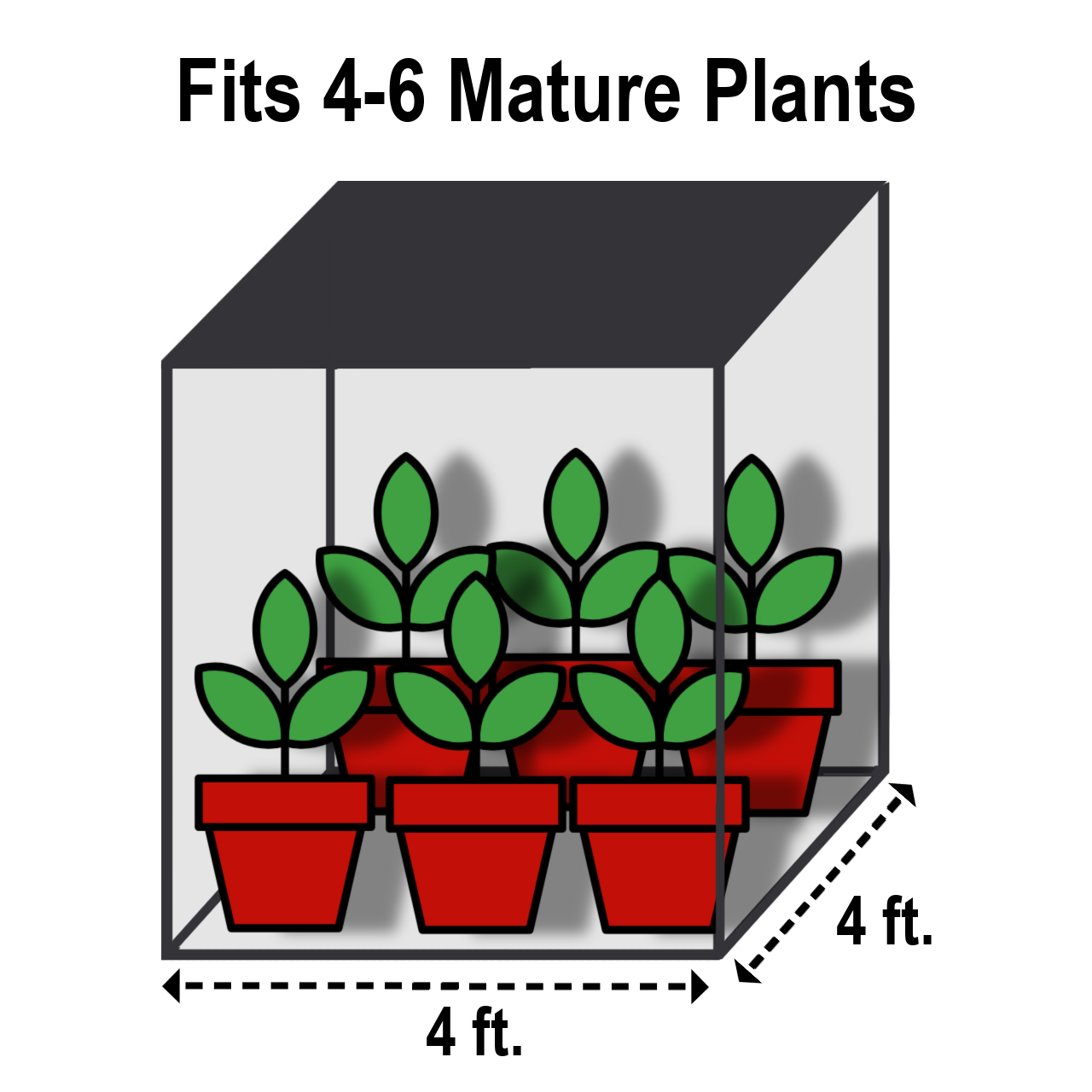
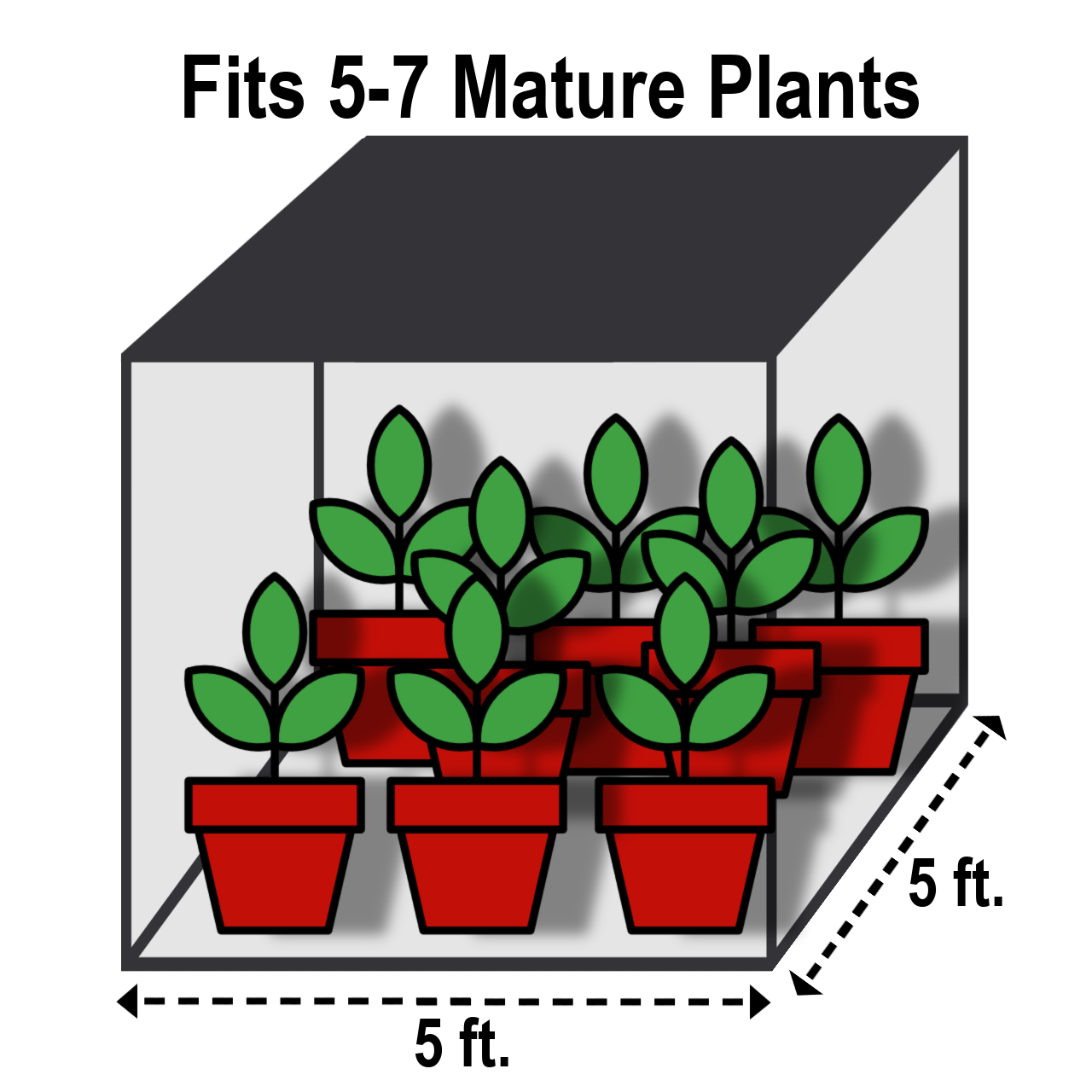
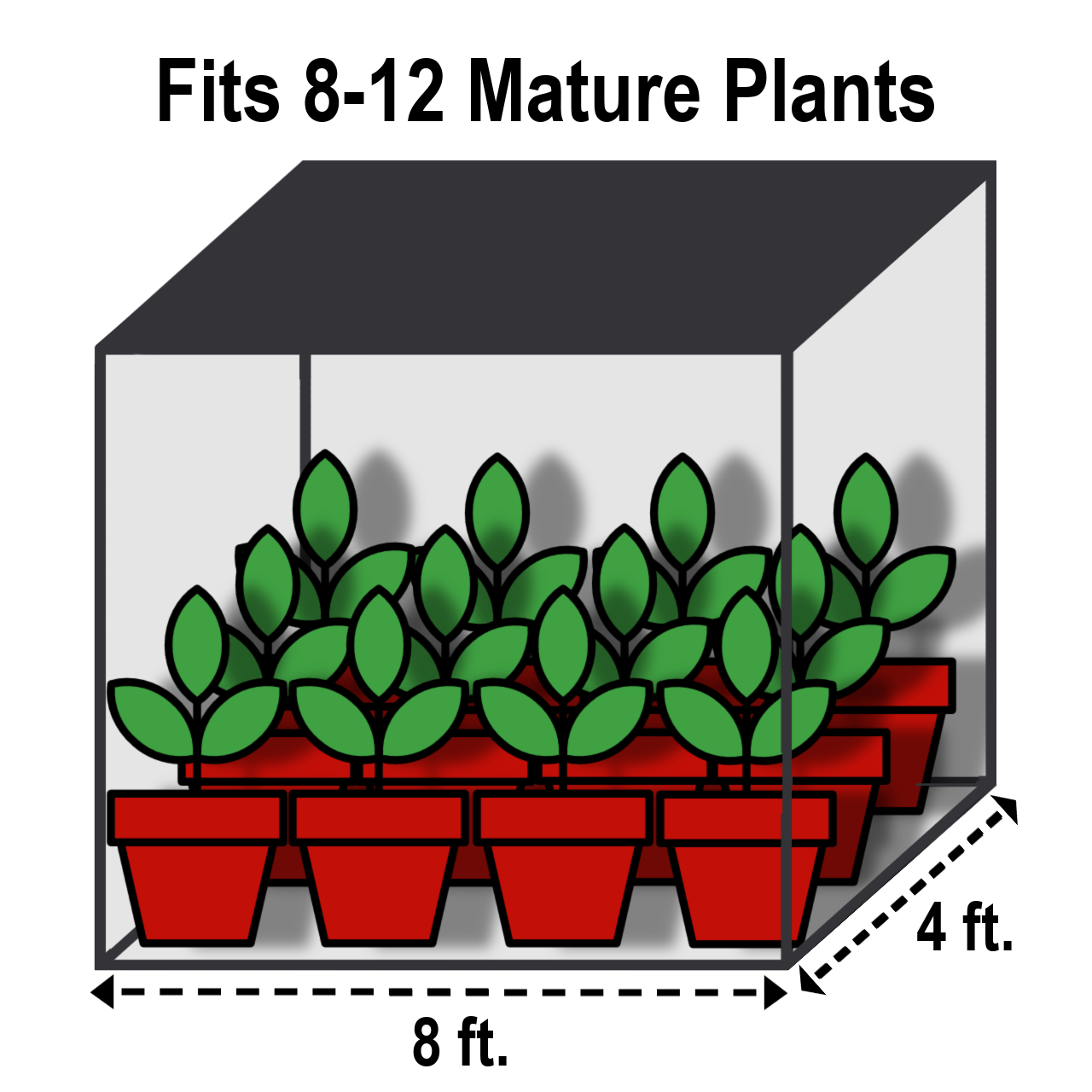
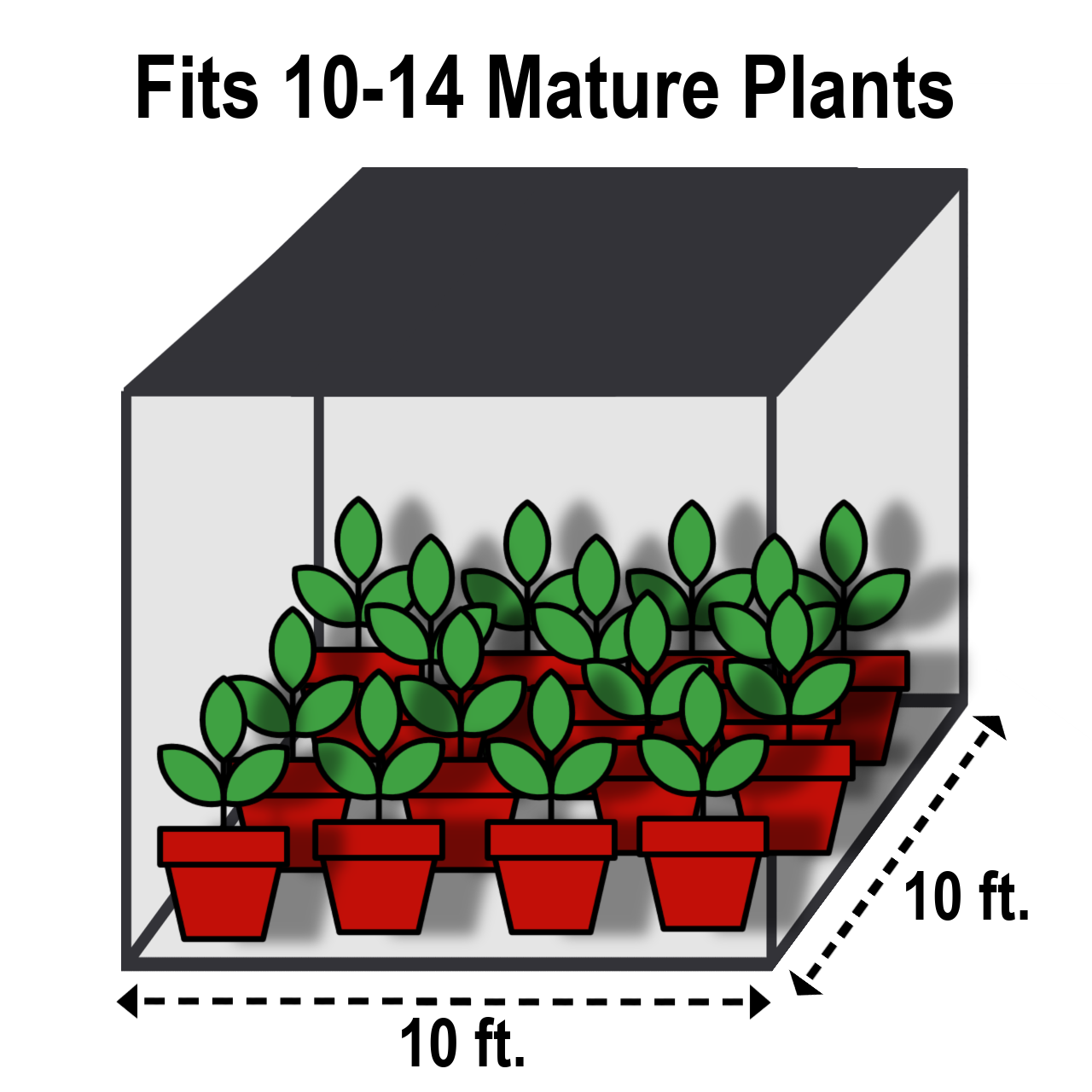
Depends entirely on training. A 4×4 tent is 16 square feet. With SOG, you can fit up to 64 autoflowers or 64 small photos. With LST, plan on 16 autos or 8 photos. With ScrOG, 8 autos or 4 photos. Untrained photoperiod plants need about 2 square feet each, so 8 is the comfortable maximum. The calculator above handles the math once you pick your training method — see our Plant Care & Maintenance guide for how each training method actually works.
What size tent do I need for 4 plants?
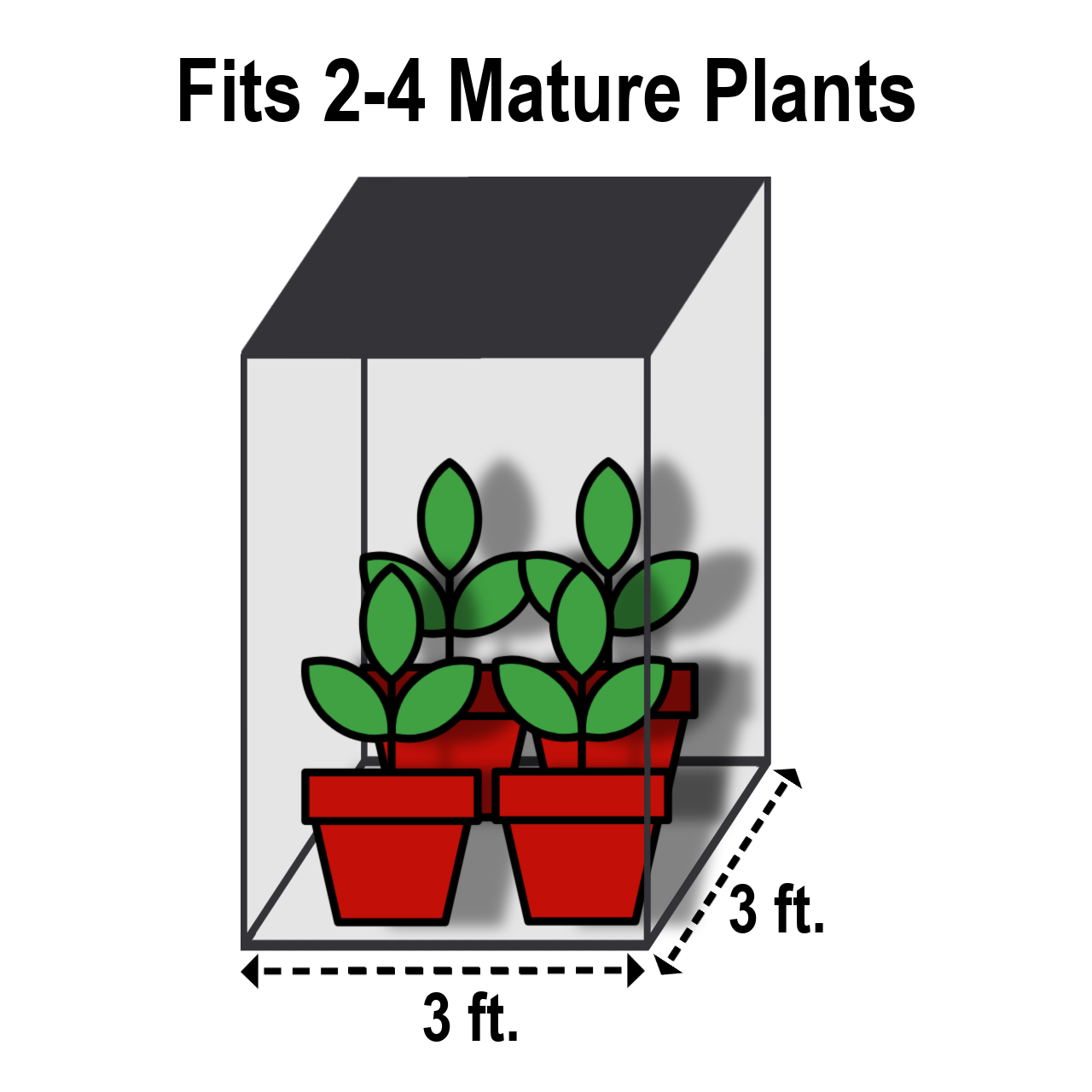
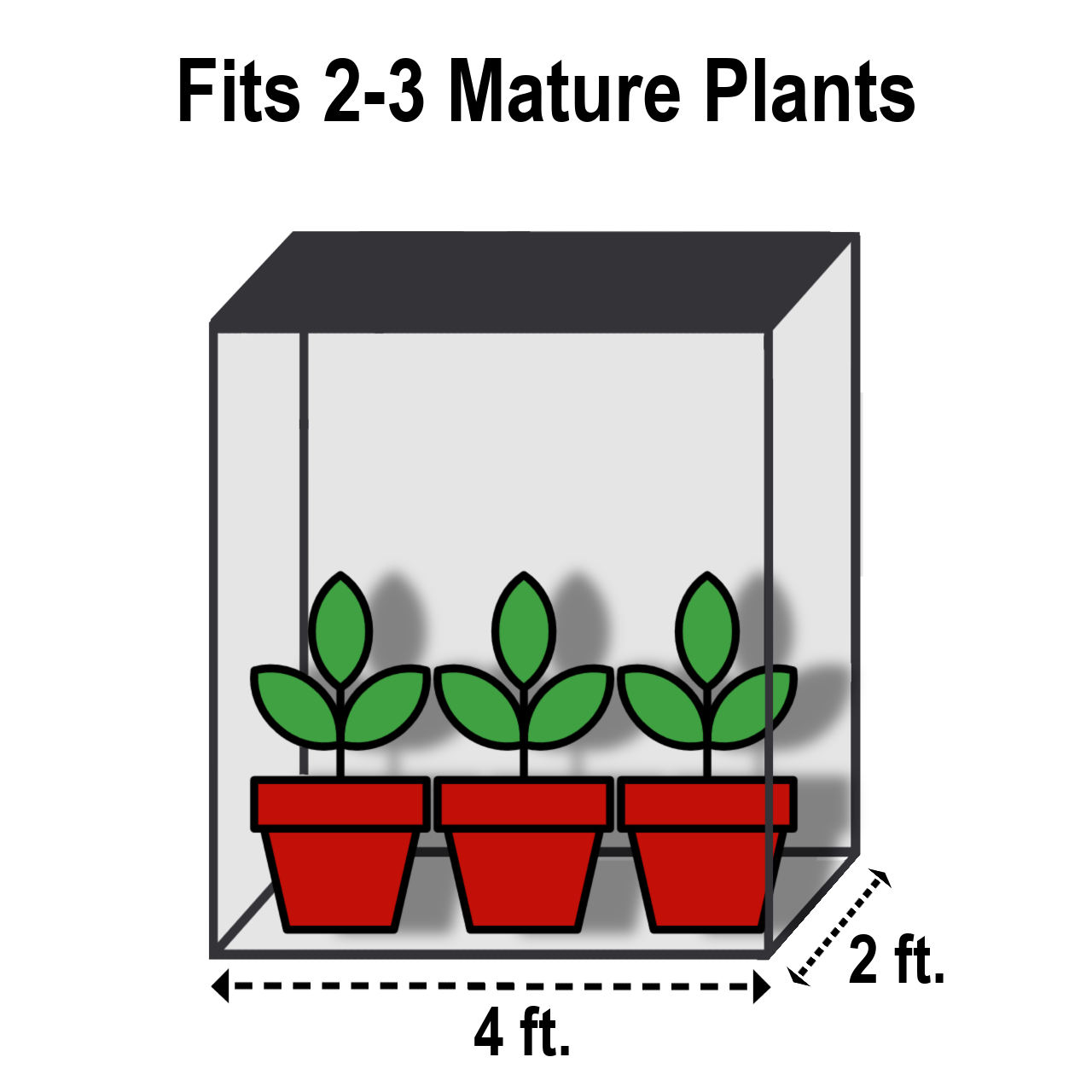
Four autoflowers with SOG fit in a 2×2. Four photos with LST need a 2×4 or 3×3. Four photos with ScrOG need a 4×4 at minimum — the canopy each ScrOG plant fills is about 2 square feet. Four untrained photos need 4×4 or 4×5, and they'll still stretch into each other in flower. "Four plants" isn't a tent size; the training method is what determines square footage.
How many watts of LED do I need per square foot?
Measured at the wall, modern LED targets 20–35W per square foot for veg-only, 30–50W for full-cycle, and 35–50W for flower-only rooms. A 4×4 flowering tent (16 sq ft) wants roughly 640–800W at the wall. Ignore the "equivalent HPS" marketing numbers on the box — they overstate what matters, which is actual power draw feeding actual diodes.
How do I calculate exhaust fan CFM for my tent?
Multiply tent length × width × height to get cubic feet, then multiply that by 1.5 for a carbon-filtered setup. A 4×4×6.5 tent is 104 cubic feet, so aim for roughly 195 CFM. Size up one notch if your duct run exceeds 8 feet or has multiple bends. Fans run quieter at 60–70% speed than smaller fans at 100%, so over-sizing slightly is smart.
Do I need a carbon filter if I'm not worried about smell?
Carbon filters do two jobs: odor control and particulate filtering. Even if smell isn't a concern, the filter catches dust, pollen, and mold spores before they enter the tent on the passive intake side or leave on the exhaust side. Most growers run one regardless. If you skip the filter, drop the CFM recommendation by about 20% since you're not paying the filter resistance tax.
Can I grow in a closet instead of a tent?
Technically yes, but a tent solves four problems a closet doesn't: reflective Mylar walls that bounce light back to plants instead of absorbing it, light-tight seals for consistent dark periods in flower, ventilation ports sized for standard ducting, and a floor tray for spills. Retrofitting a closet to match takes more effort and money than a 2×4 tent costs. Use a tent unless you have a specific reason not to — our Grow Tents & Kits guide walks through complete tent options.
What's the smallest tent worth buying?
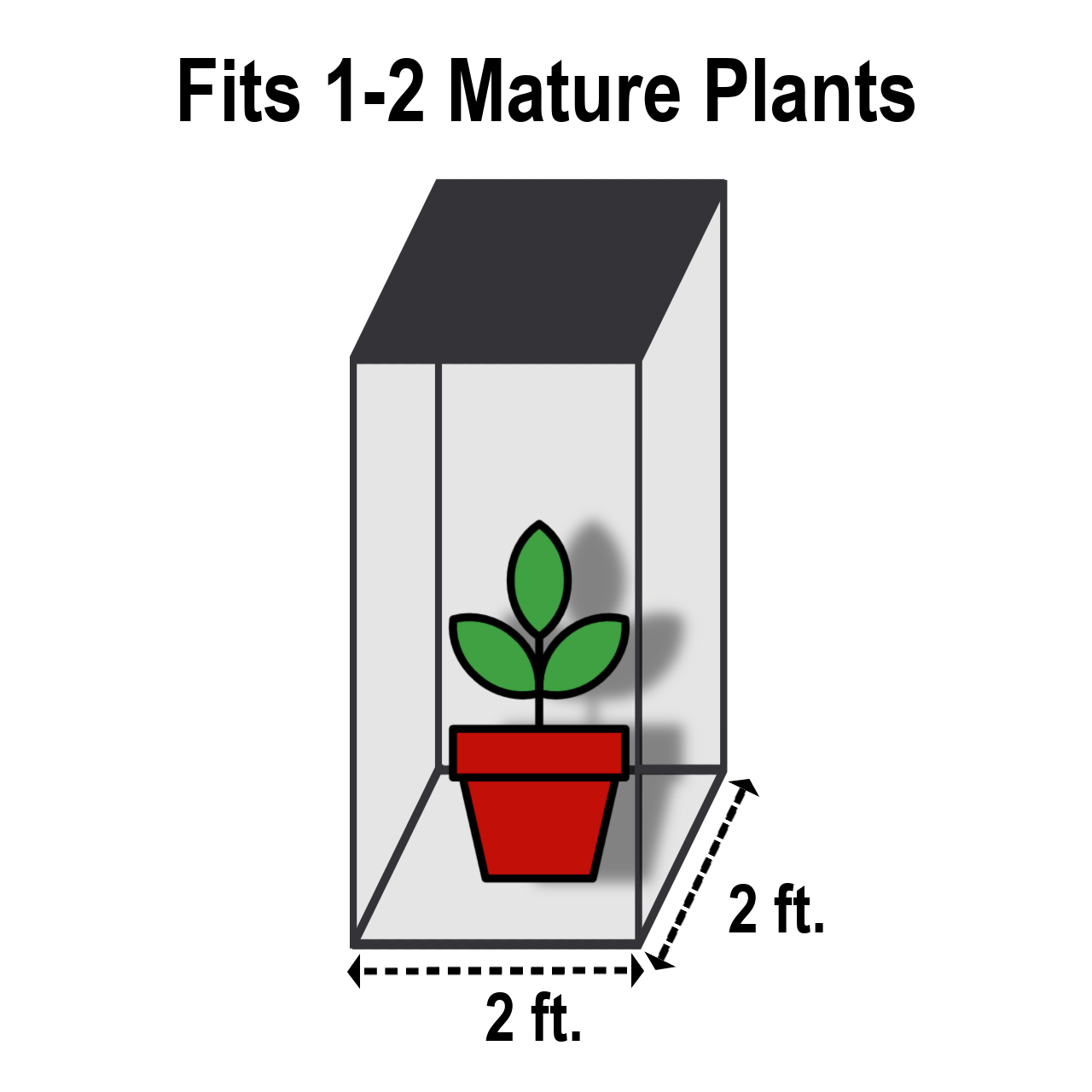
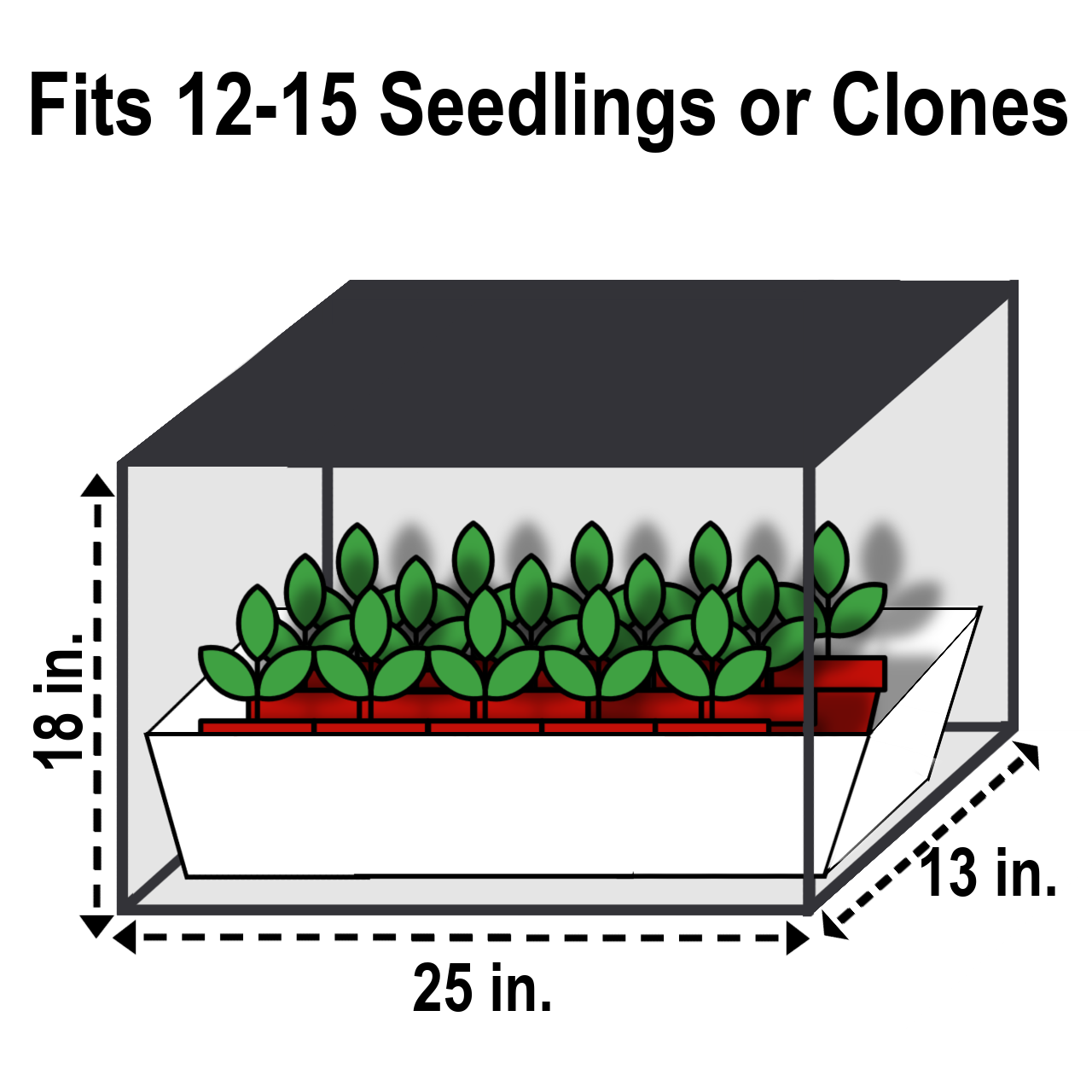
A 2×2 is the practical minimum for a real harvest — about 4 square feet of canopy, enough for 1–2 photoperiod plants or 4 small autos under SOG. Anything smaller (like a propagation tent) is for clones and seedlings only, not flowering plants. First-time growers often benefit from starting in a 2×4 or 3×3: still cheap, still manageable, but produces a meaningful harvest and leaves room to make mistakes without cramming plants.
Does tent height actually matter?
Yes — it's the single variable most first-time buyers underestimate. A 5 ft tent leaves about 2 ft of actual plant space after subtracting pot height, light-to-canopy distance, and fixture depth. That's fine for autos, tight for LST, and impossible for untrained sativas that stretch 2–3× in flower. Go 6.5 ft tall unless your ceiling forces otherwise. Tall tents (7.5 ft) are overkill for most home grows but essential for sativa-dominant genetics or mother rooms.
Everything you need to build the tent this tool recommended
Tent, light, and exhaust are one system — undersize any one and the other two compensate badly. A complete kit takes the guesswork out. If you prefer to piece it together, every component below is sized to match what the calculator just recommended.
Complete Tent Kits
Tent, light, inline fan, carbon filter, ducting, timers — everything matched and spec'd to work together. The fastest path from "I want to grow" to first harvest.
Grow Tents
Tent only, no accessories. For growers who already have their light and exhaust dialed in and just need the enclosure.
LED Grow Lights
Modern Samsung LM301H-class diodes at the wattage this calculator recommended. Dimmable drivers let one fixture handle both veg and flower.
Fan + Filter Kits
Inline fan, carbon filter, ducting, and clamps pre-matched at the CFM range this tool recommended. Sizes up one notch for safety margin.
Monitoring & Meters
Hygrometers, EC meters, PAR meters. Pair with the VPD and PPM/EC calculators to dial in every environmental variable this tool didn't cover.
Nutrient Starter Systems
Complete three- or four-part feed lines with feed schedules. Starting EC targets per stage live in the PPM/EC converter tool.